Home › Blog › Approved supplier list
How to Keep Your Approved Supplier List Up to Date
By Neotas Editorial Team | Last reviewed: 11 November 2026 | Reading time: 17 minutes
An approved supplier list (ASL) only protects you if every entry still describes a supplier you would approve today. Most lists fall behind within months of an audit. A supplier changes owner, a certificate lapses, a site receives an enforcement notice, and the quality team finds out at the next annual review or from an auditor.
To maintain an approved supplier list properly, you need three things running together: scheduled supplier re-evaluation by risk tier, immediate review when a trigger event occurs, and supplier monitoring between reviews. The routine, template and procedure below work for a two-person quality team and scale to a full supplier quality function.
Quick answer: To keep an approved supplier list up to date, re-evaluate each supplier on a cycle set by its risk tier, review it straight away when a trigger event occurs (an ownership change, sanctions designation, enforcement action or certificate suspension) and monitor critical suppliers between reviews. Record every status decision with its evidence, date and owner.
What is an approved supplier list? Quick check: is your ASL current? Why lists go out of date ISO 13485 supplier evaluation and other rules How often to review Trigger events The 8-step routine ASL procedure: who does what Approved supplier list template Suspend, requalify or remove a supplier Small quality teams Common mistakes Metrics FAQs References
- Test every ASL entry for scope, evidence, status and ownership
- Run the six-point health check on your current list
- Know the six ways a supplier record goes stale
- Read ISO 13485 clause 7.4.1 as a duty to re-evaluate, with records
- Set supplier review cycles by risk tier
- Act on trigger events between scheduled reviews
- Use five supplier statuses and a written ASL procedure
- Build the list from a template with a change log
- Apply every status change in the ERP
- Report five metrics that prove the list is current
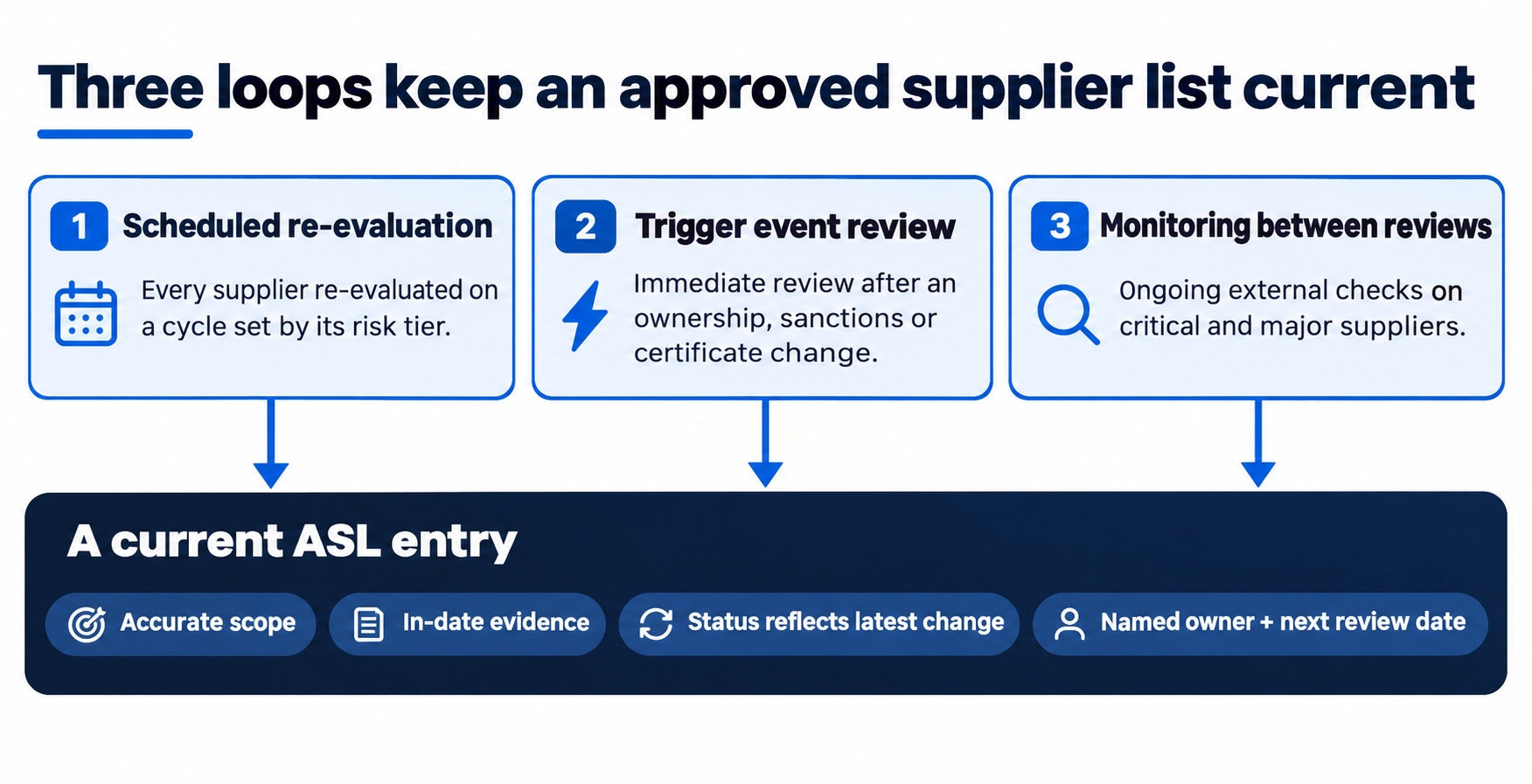
Figure 1. Three loops keep every approved supplier list entry current.
What is an approved supplier list, and when is it up to date?
Quick answer: An approved supplier list (ASL) is a controlled record of the suppliers your organisation has evaluated and approved, and the specific products, materials, services and sites each one is approved for. It is up to date when every entry describes the supplier as it is today.
For medical device manufacturers, IVD makers and distributors, the approved suppliers list is the gate between quality and purchasing. If a supplier or item is not on it, buyers should not raise an order. ISO 9001 manufacturers, food businesses and public bodies keep similar lists under different names.
| Term | What it usually means | Typical owner |
|---|---|---|
| Approved supplier list (ASL) | Suppliers approved for specific items, materials, services or sites, with evidence of evaluation behind each approval | Quality |
| Approved vendor list (AVL) | The same idea under procurement and finance naming. It often covers indirect spend as well as production suppliers. | Procurement or finance |
| Preferred supplier list | A subset of approved suppliers that buyers should use first, usually because a contract or price is in place | Procurement |
| Qualified suppliers list | Suppliers that passed a formal supplier qualification process. The term is common with regulators and public buyers. | Quality or the buying authority |
Whatever you call it, an entry is current only if it passes four tests.
| Test | What it means |
|---|---|
| 1. Scope is accurate | The entry names the items, sites and services the supplier is approved for, and nothing more. |
| 2. Evidence is in date | Certificates, the quality agreement and the last audit or questionnaire are current, and certificates were checked with the issuer. |
| 3. Status reflects the latest change | Every trigger event since approval has a recorded decision, even if the status stayed the same. |
| 4. Someone owns it | A named person is responsible for the entry, and it has a next review date. |
Quick check: is your approved supplier list current?
Answer these six questions for your critical suppliers. Each “no” points to a section of this guide.
- ☐ Every entry has a named owner and a next review date in the future.
- ☐ Every critical supplier has been re-evaluated in the last 12 months.
- ☐ You would know within a week if a critical supplier changed owner or was sanctioned.
- ☐ Certificates on file were checked with the issuing body, not just saved as PDFs.
- ☐ Suppliers removed from the list are also blocked in your ERP.
- ☐ You can show an auditor every status change since approval, with dates and reasons.
Section summary: an approved supplier list records who may supply what, from where. An entry that fails any of the four tests is out of date, even if the supplier is delivering on time.
Why does an approved supplier list go out of date?
Quick answer: An approved supplier list goes out of date because suppliers change after approval, and most of those changes never reach the quality team. Internal performance data catches some of them. Ownership, legal and reputational changes need outside sources.
Changes you can see from inside the business
1. Performance decline
Late deliveries, rising nonconformances and slow responses to supplier corrective action requests (SCARs). Supplier performance monitoring picks these up if the data is reviewed.
Seen in: incoming inspection, NCR and scorecard data · Usual impact: Conditional
2. Evidence expiry
An ISO 13485 certificate expires or is suspended, insurance lapses, or the quality agreement on file is an old version.
Seen in: expiry dates on the list, checks with the issuing body · Usual impact: Conditional
3. Scope creep
Buyers start ordering a new part, product ships from a second site, or a distributor starts subcontracting storage or logistics.
Seen in: purchase orders matched against approved scope · Usual impact: Not approved for new item
Changes that come from outside the business
4. Ownership and control changes
The supplier is acquired, gains a private equity owner or appoints new directors. A new owner can move production, cut staff or change processes without telling customers.
Seen in: company registries and ownership monitoring · Usual impact: Flagged for review
5. Regulatory and legal action
Warning letters, recalls, notified body actions, court cases and insolvency proceedings against the supplier or its parent.
Seen in: regulator databases, court and insolvency records · Usual impact: Conditional or Suspended
6. Integrity and sanctions exposure
A sanctions designation, a link to a politically exposed person, or reports of fraud, bribery or forced labour involving the supplier or its owners.
Seen in: sanctions lists, adverse media in the original language · Usual impact: Suspended if confirmed
A supplier scorecard covers the first three. The last three come from outside the business, so a scorecard alone cannot keep an approved vendor list or ASL current. Our guide to healthcare supply chain risk covers how these risks build up across a supplier base, and our guide to healthcare vendor concentration risk covers what happens when one critical supplier fails.
Illustrative example: a contract steriliser on your list is bought by a group that consolidates sites. Six months later your loads are processed at a different facility. Your ASL still says “approved, site A”. Delivery and quality scores look normal, yet the approval no longer describes what you are buying.
In short: performance data shows how a supplier is delivering. It does not show who owns the supplier, whether its certificates still stand, or whether it now carries legal or sanctions risk.
What does ISO 13485 supplier evaluation require for your approved supplier list?
Quick answer: ISO 13485:2016 clause 7.4.1 requires documented criteria for evaluating and selecting suppliers, a plan for monitoring and re-evaluating them, and records of the results and any actions taken. Monitoring results must feed into re-evaluation, and your response to a supplier problem must be proportionate to the risk. [1]
The selection criteria must reflect four things:
- the supplier’s ability to meet your requirements;
- its performance;
- the effect of the purchased product on device quality;
- the risk associated with the device.
ISO 13485 does not prescribe a list format. Most manufacturers keep these purchasing controls records in an approved supplier list, so auditors and notified bodies usually start their purchasing review there. For ISO 13485 supplier management, the ASL is the single place where evaluation, monitoring and re-evaluation records meet.
ISO 13485, ISO 9001, EU MDR and other rules compared
| Rule | Applies to | What it means for your list |
|---|---|---|
| ISO 13485:2016, clause 7.4.1 [1] | Device and IVD manufacturers and their suppliers certified to the standard | Evaluation criteria, planned monitoring and re-evaluation, and records of results and actions for every supplier |
| ISO 9001:2015, clause 8.4 [2] | Organisations certified to ISO 9001 | Criteria for evaluating, selecting, monitoring and re-evaluating external providers, with retained records. This is the basis for an approved supplier list under ISO 9001. |
| EU MDR (Regulation (EU) 2017/745), Article 10(9) and Annex IX [3] | Manufacturers placing devices on the EU market | The quality management system must cover selection and control of suppliers and subcontractors. Notified bodies must run unannounced audits at least once every five years, which can extend to suppliers and subcontractors. |
| FDA QMSR (21 CFR Part 820) [4] | UK and EU manufacturers selling devices in the US | Since 2 February 2026, Part 820 incorporates ISO 13485:2016 by reference, so clause 7.4 governs supplier controls in FDA inspections |
| NHS (Procurement, Slavery and Human Trafficking) Regulations 2025 [6] | Public bodies buying for the NHS in England, and in practice their suppliers | In force since 17 May 2026. Buyers must assess modern slavery risk before going to market, so suppliers face direct questions about how they check their own supply chains. |
| EU Forced Labour Regulation (EU) 2024/3015 [7] | Any company placing products on, or exporting from, the EU market | From 14 December 2027, products made with forced labour, including components, cannot be placed on, made available on or exported from the EU market |
This section is general information, not legal advice. Take advice on the regulations that apply to your devices and markets.
According to ECA Academy’s analysis, purchasing controls deficiencies appeared in 15 of the 44 FDA warning letters issued to medical device manufacturers in fiscal year 2025 (1 October 2024 to 30 September 2025). Purchasing controls ranked fourth among cited deficiencies. [5]
Health systems check this from the other side. Our guide to healthcare vendor risk management explains what hospital and NHS buyers ask device suppliers to show. For the US clause-by-clause view, read the 21 CFR 820 and FDA QMSR supplier control guide.
Section summary: ISO 13485 supplier evaluation does not end at approval. Clause 7.4.1 requires planned monitoring and re-evaluation with records, and EU MDR, FDA QMSR, NHS procurement rules and the EU Forced Labour Regulation each add reasons to keep the list current.
How often should you review your approved supplier list?
Quick answer: Review each supplier on a cycle set by its risk tier, and review the approved supplier list as a whole at least quarterly. ISO 13485 requires monitoring and re-evaluation proportionate to risk but does not set fixed intervals, so you define the cycle and justify it in your purchasing procedure.
| Tier | Typical suppliers | Full re-evaluation | External checks between reviews | Audit |
|---|---|---|---|---|
| Critical | Contract manufacturers, sterilisers, suppliers of components or software that affect safety or performance | Every 12 months | Continuous monitoring with alerts | Risk-based, commonly every 1 to 2 years |
| Major | Custom components, calibration services, distributors and importers that handle your devices | Every 12 to 24 months | Screening at least every 6 months, plus alerts on trigger events | When performance or a trigger event warrants it |
| Minor | Standard off-the-shelf items and services with no direct product impact | Every 24 to 36 months, or when scope changes | Screening at re-evaluation | For cause only |
Treat these cycles as a starting point. A critical supplier with repeat nonconformances may need a six-month cycle. A minor supplier with ten years of clean history may justify the longer end. Refresh checks follow the same logic as vendor due diligence and a third-party risk assessment: depth and frequency follow risk.
The quarterly list-level review is separate. It looks at overdue entries, open trigger events, expiring evidence and approved suppliers you no longer use. It is the simplest form of approved vendor list management, and it stops overdue entries from piling up between supplier reviews.
Section summary: tier sets the cycle, and your procedure must explain why. A quarterly review of the whole list keeps the gaps between supplier reviews visible.
Which events should trigger an immediate supplier review?
Quick answer: Review a supplier straight away when something changes who owns it, whether you can lawfully trade with it, or whether its product still meets your requirements. These trigger events should not wait for the scheduled review date.
| Trigger | Where you would see it | First action | Status while you assess |
|---|---|---|---|
| Change of ownership, new parent or private equity owner | Company registries, press, supplier notice | Confirm what changed: sites, people, processes | Flagged; Conditional if critical |
| New directors or persons with significant control | Companies House and equivalent registries | Screen the new individuals | Flagged |
| Sanctions designation of the supplier, an owner or a director | UK Sanctions List [8], EU and US sanctions lists | Stop new orders and take legal advice | Suspended |
| Warning letter, recall or notified body action at the supplier | FDA warning letters [9], recall notices, notified body | Assess impact on your products and open orders | Conditional or Suspended |
| Certificate expiry, suspension or withdrawal | Issuing certification or notified body | Request evidence and verify it with the issuer | Conditional |
| Insolvency, administration or unpaid judgments | Gazette notices, insolvency and court records | Check supply continuity and second sources | Conditional |
| Credible adverse media on fraud, bribery or forced labour | National and regional press, in the original language | Verify the source and ask for the supplier’s response | Flagged; Suspended if substantiated |
| Supplier change notification: new site, material, process or sub-supplier | Notice under your quality agreement | Run a change assessment and requalify if needed | Approved for existing scope only |
| Repeat nonconformances or overdue SCARs | NCR and SCAR records | Escalate under your procedure | Conditional |
| Orders for an item or site outside approved scope | Purchase order data | Block or qualify before release | Not approved for that item |
Treat media reports as allegations until you have checked them. A report of an investigation is different from a finding or a conviction, and the decision record should say which one you relied on. Since 28 January 2026, the UK Sanctions List has been the only source for UK sanctions designations, so update any check that still points to the old OFSI list. [10]
Set a decision target for each tier, for example 10 working days for critical suppliers. Supplier change notifications have their own process, covered in our QMSR supplier change guide.
Section summary: ownership changes, sanctions, enforcement action, certificate problems, insolvency, credible adverse media and supplier changes should each prompt a recorded decision within a set number of days.
How to maintain an approved supplier list: an 8-step routine
Quick answer: Give every entry an owner, a tier, a status and a next review date, then feed it with internal performance data and external change signals. These eight steps turn that into a routine your team can repeat every month.
Step 1
Name an owner for every entry. Usually the supplier quality engineer or the category buyer. The Head of Quality owns the list as a whole.
Step 2
Define your statuses. Use the five statuses below and write down what each one allows buyers to do.
Step 3
Tier every supplier by product risk. Record why each supplier sits in its tier so an auditor can follow the logic.
Step 4
Set a next review date on every entry. Calculate it from the tier. No entry should have a blank date.
Step 5
Connect external change signals. For critical and major suppliers, cover registries, sanctions lists, regulator databases and adverse media, with alerts going to the entry’s owner.
Step 6
Run a monthly hygiene check. Look for inactive suppliers, duplicate records, suppliers active in the ERP but not approved, and evidence expiring in the next 60 days.
Step 7
Record every decision with its evidence. Note who decided, what they saw, what changed and the date.
Step 8
Report the list’s health each quarter. Bring the five metrics further down into management review.
The five supplier statuses and what each allows
| Status | Meaning | New orders | Open orders | Who can change it |
|---|---|---|---|---|
| Approved | Meets your criteria for the stated scope | Yes, within scope | Continue | Supplier quality |
| Conditional | Approved with restrictions while an issue is resolved, such as tighter incoming inspection | Yes, with stated controls | Continue with controls | Head of Quality |
| Suspended | Under investigation, or a legal restriction applies | No | Hold and assess | Head of Quality, with legal input for sanctions |
| Disqualified | Removed after a recorded decision | No | Close out or move to another supplier | Head of Quality |
| Inactive | No orders for 12 months or more, so approval has lapsed | No, until requalified | None | Supplier quality |
Approved supplier list procedure: who does what
A written approved supplier list procedure stops decisions falling between quality and purchasing. Keep it to one page and reference it from your purchasing SOP.
| Activity | Does the work | Approves | Consulted |
|---|---|---|---|
| Supplier qualification and first approval | Supplier quality engineer | Head of Quality | Engineering, purchasing |
| Risk tiering | Supplier quality engineer | Head of Quality | Engineering, regulatory |
| Scheduled re-evaluation | Entry owner | Head of Quality for critical suppliers | Purchasing |
| Trigger event review | Entry owner | Head of Quality | Legal, compliance, regulatory |
| ERP vendor block or release | Purchasing or finance | Head of Quality | Planning |
| Quarterly list health report | Quality systems lead | Management review | Purchasing |
Approved supplier list template: the fields every entry needs
Use these columns in a spreadsheet, eQMS or ERP. The last column shows how each field goes stale, which tells you what to check at every supplier review.
| Field | What to record | Why an auditor asks | How it goes stale |
|---|---|---|---|
| Legal entity | Registered name, registration number, country | Confirms who you buy from | Mergers, renaming, new parent |
| Approved sites | Address of each approved manufacturing or service site | Approval is site-specific | Production moves |
| Approved scope | Part numbers, materials or services | You may buy only what you qualified | Buyers order new items |
| Risk tier and rationale | Critical, major or minor, with the reason | Shows a risk-based approach | Product or use changes |
| Status | One of the five statuses | Tells buyers what they may order | Decisions go unrecorded |
| Approval basis | Audit, questionnaire, certificate review, sample testing | Evidence of evaluation | Evidence ages |
| Certificates | Standard, issuer, certificate number, expiry date | Shows the supplier’s QMS status | Expiry, suspension, withdrawal |
| Quality agreement | Version and date signed | Sets change notification and audit rights | An old version stays on file |
| Owners and key people | Beneficial owners and directors | Supports sanctions, conflict and integrity checks | Ownership changes |
| Evaluation dates | Last evaluation and next review date | Proves re-evaluation is planned | Reviews are missed |
| Monitoring | What is monitored and the date of the last alert | Proves oversight between reviews | Alerts go unread |
| Entry owner | Named person | Accountability | Staff leave |
| Change log | Date, change, decision, approver | Lets an auditor follow every decision | Spreadsheet cells are overwritten |
Need the questions to fill these fields? Start from these resources.
In short: owners, tiers, statuses and dates make the list manageable. The procedure and the change log make it defensible, because they show who decided what, when and why.
How to suspend, requalify or remove a supplier
Quick answer: When a trigger fires, verify the facts, assess the impact on product and open orders, decide the status, then apply that decision in the systems buyers use. A status changed on the list but not in the ERP has no effect on orders.
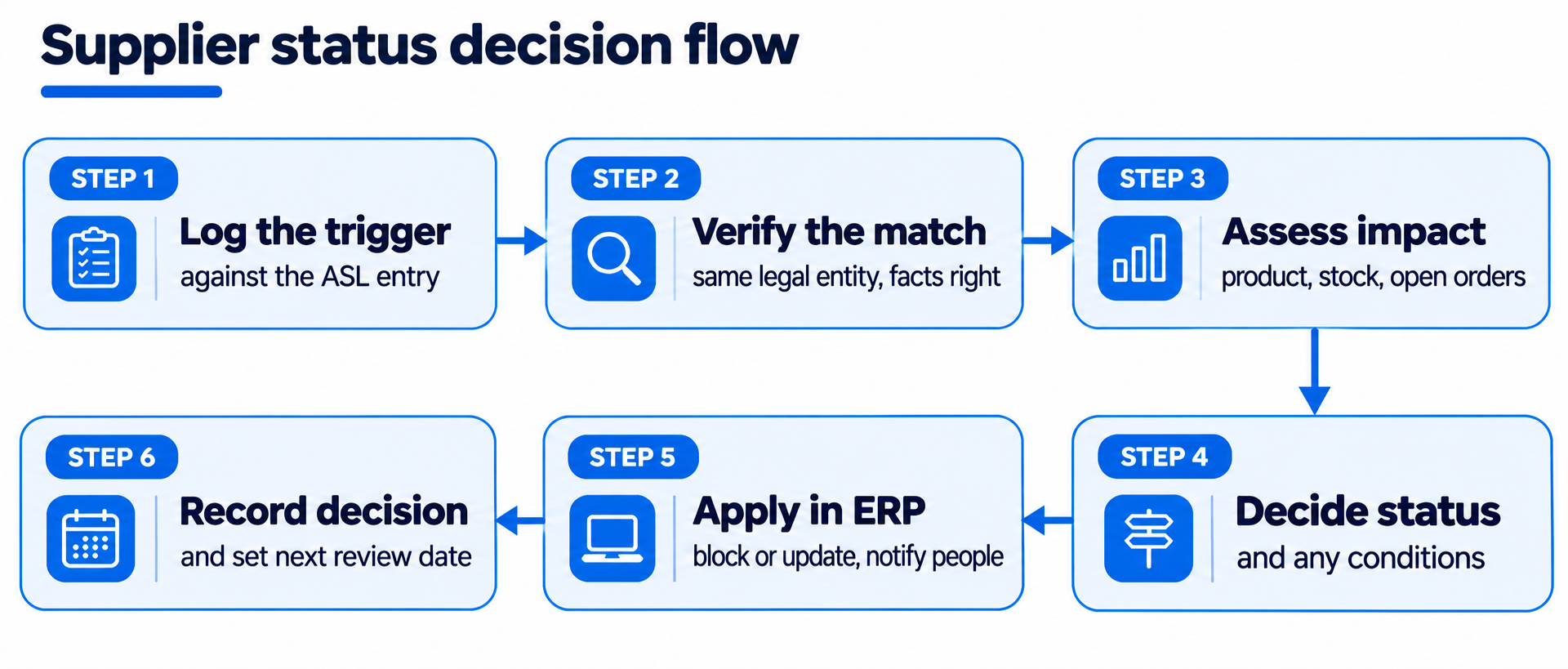
Figure 2. Supplier status decision flow.
Verify the match first. Common company names and group structures produce false matches. Confirm the registration number, address and directors before you act on a finding.
Deal with open orders and stock. Decide whether open orders continue, pause or move to another supplier, and whether received stock needs extra inspection. Product impact decisions go through your nonconformance and CAPA processes.
Tell the right people. Buyers, planners and the supplier need to know the new status and what it allows. If the issue affects devices already on the market, your vigilance and regulatory teams decide what to report.
Requalify on evidence. Supplier requalification follows the same supplier qualification process you used at onboarding, scaled to the issue. That means corrective action evidence, a re-audit or sample testing where needed, and an updated quality agreement if terms changed.
Keep the records after removal. A disqualified supplier stays in your records for your retention period. The third-party risk management lifecycle guide covers offboarding in more detail.
Section summary: verify, assess, decide, apply, record. The step most often missed is applying the decision in the ERP, which is what actually stops orders.
How can a small quality team keep the approved supplier list current?
Quick answer: Automate the watching and keep people for the decisions. A one- or two-person quality team cannot manually re-check hundreds of suppliers for ownership, sanctions and adverse media every month. Software can, and a person then decides what a finding means for your devices.
| Automate | Keep for people |
|---|---|
| Review dates calculated from each supplier’s tier | Confirming a serious finding relates to your supplier |
| Reminders before certificates and agreements expire | Judging the impact on your devices |
| Registry, sanctions and adverse media checks | Changing a supplier’s status |
| Alerts routed to the entry’s owner | Requalification and supplier audits |
| A timestamped audit trail of every check | Any communication with regulators |
Neotas third-party risk management for healthcare follows this split, and the platform is deployable in hours with no IT project:
- Approval: supplier questionnaires configured to your quality system, with weighted scoring and approval by risk.
- Review dates: every supplier review date has a named owner.
- Behind the supplier: owners, directors, sanctions, politically exposed persons, adverse media and court records.
- Monitoring: ongoing checks by risk tier across 30+ languages, with alerts when a risk changes.
- Evidence: every finding saved with its source, in a full audit trail.
- Escalation: a risky supplier or distributor moves to a full enhanced due diligence investigation in the same case, with an AI first-view report validated by analysts.
- People vendors: locums, contractors and consultants get pre-employment, ID and right-to-work checks through employment screening.
- After a deal: bulk onboarding and screening when you acquire a company and its supplier file.
It sits alongside your QMS and supplier audits and does not replace either, and it does not provide cyber ratings. Neotas is trusted by NHS trusts and the NMC, and was named a Market Disruptor for Know Your Third Party and Supply Chain in the Chartis FCC50 2026.
What mistakes make an approved supplier list unreliable?
Quick answer: Five mistakes cause most out-of-date approved supplier lists. Each one is simple to fix once you know to look for it.
Mistake 1: Approval with no review date
An entry approved in 2022 with no next date reads as “approved forever”. Every entry needs a date calculated from its tier.
Mistake 2: Reviewing only delivery and quality scores
Scorecards miss ownership changes, sanctions, enforcement action and insolvency, which are the events most likely to make an approval wrong.
Mistake 3: Leaving service and people-heavy suppliers off the list
Distributors, importers, contract sterilisers, calibration laboratories and consultants affect product quality and belong on the list with a tier and a review date.
Mistake 4: Removing a supplier from the spreadsheet but not the ERP
If the vendor record stays active, buyers can still raise orders. Status changes must reach the system that issues purchase orders.
Mistake 5: Filing a certificate without checking it
A PDF on file does not prove the certificate is valid today. Check status and scope with the certification or notified body.
How do you show your approved supplier list is current?
Quick answer: Track five metrics and bring them to management review each quarter. Together they show an auditor, and your own leadership, that the list reflects today’s supply base.
| Metric | Suggested target |
|---|---|
| Entries past review date | Zero for critical suppliers |
| Days from trigger to decision | Median by tier, against your target |
| Critical suppliers under monitoring | 100% |
| Approved but unused | Suppliers with no orders in 12 months, reviewed and set to inactive |
| Entries without an owner | Zero |
Targets are suggested starting points. Set your own in your purchasing procedure.
Neotas case studies on supplier risk
Do you know who owns your critical suppliers?
A Neotas supplier due diligence case study on ownership risk in critical medical device suppliers. Read the supplier due diligence case study
Open-source intelligence for supply chain risk
How open-source intelligence was used to detect modern slavery risk in a supply chain. Read the supply chain case study
Third-party risk management using OSINT
A step-by-step approach to categorising third-party vendors and mapping their risk profiles with open-source intelligence. Read the TPRM case study
Browse all Neotas case studies.
Key takeaways
- An approved supplier list is current only when every entry has accurate scope, in-date evidence, a status that reflects the latest change and a named owner.
- ISO 13485 clause 7.4.1 requires planned monitoring and re-evaluation of suppliers, with records of results and actions, proportionate to risk. EU MDR and FDA QMSR build on the same clause.
- Re-evaluate critical suppliers at least every 12 months, and review any supplier within days of an ownership change, sanctions designation, enforcement action, certificate problem or insolvency.
- Most changes that make an approval wrong happen outside your business, so delivery and quality scorecards need external checks on owners, sanctions, regulators and media alongside them.
- Five statuses, a one-page approved supplier list procedure and a change log let an auditor follow every decision, and every status change must reach the ERP.
- A small quality team can keep the list current by automating external checks and alerts and keeping status decisions for people.
Know what has changed since you approved each supplier
Neotas helps quality teams check who owns and runs each supplier, watch for changes between audits, and keep a source-linked record of every decision for auditors, notified bodies and NHS buyers.
Approved supplier list FAQs
Direct answers to the questions quality, regulatory and procurement teams ask most about approved supplier lists, supplier evaluation and ISO 13485.
Approved supplier list basics
What is an approved supplier list?+
An approved supplier list (ASL) is a controlled record of the suppliers an organisation has evaluated and approved, and the specific products, materials, services and sites each one is approved for. Purchasing uses the ASL to decide who can receive orders. Quality uses it as evidence of supplier evaluation and re-evaluation under ISO 13485, ISO 9001 and regulations such as EU MDR.
What is the difference between an approved supplier list and an approved vendor list?+
An approved supplier list and an approved vendor list (AVL) mostly mean the same thing: a list of suppliers cleared to receive orders. “Approved supplier list” is more common in quality and manufacturing for parts, materials and production services. “Approved vendor list” is more common in procurement and finance and often covers indirect spend. Both should record approved scope, status, evidence and a review date.
What should an approved supplier list template include?+
An approved supplier list template should include these fields:
- legal entity and registration number;
- approved sites and approved scope;
- risk tier and rationale;
- current status and approval basis;
- certificates with expiry dates and the quality agreement version;
- owners and directors;
- last and next review dates, and the monitoring in place;
- a named entry owner and a change log.
The change log lets an auditor follow every decision.
What is the difference between an approved supplier and a preferred supplier?+
An approved supplier has passed your evaluation and may receive orders for its approved scope. A preferred supplier is an approved supplier that buyers should use first, usually because a contract, volume price or strategic agreement is in place. Every preferred supplier must also be approved. Not every approved supplier is preferred.
Keeping the list current
How do you keep an approved supplier list up to date?+
You keep an approved supplier list up to date by running three loops together:
- scheduled re-evaluation of each supplier on a cycle set by its risk tier;
- immediate review after trigger events such as ownership changes, sanctions designations, enforcement actions or certificate suspensions;
- monitoring of critical suppliers between reviews.
Every entry needs a named owner, a status, a next review date and a recorded decision for each change.
How often should an approved supplier list be reviewed?+
Review each supplier on its risk-tier cycle, and review the whole list at least quarterly. A common starting point is:
- critical suppliers: every 12 months;
- major suppliers: every 12 to 24 months;
- minor suppliers: every 24 to 36 months.
Review any supplier immediately after a trigger event. ISO 13485 does not fix the intervals, so document the reasoning in your purchasing procedure.
What events should trigger a supplier re-evaluation?+
A supplier re-evaluation should be triggered by any of the following:
- an ownership or control change;
- a sanctions designation linked to the supplier or its owners;
- an FDA warning letter, recall or notified body action;
- a certificate suspension, insolvency or credible adverse media on fraud or forced labour;
- a supplier change notification or repeated nonconformances.
Record the decision and its evidence even when the supplier’s status stays the same.
How do you monitor approved suppliers between audits?+
You monitor approved suppliers between audits by combining internal performance data with external checks. Internal data covers incoming inspection, nonconformances and SCARs. External checks cover:
- company registries for ownership and director changes;
- sanctions lists;
- regulator databases;
- adverse media in the original language.
Alerts should go straight to the supplier’s named owner.
How do you remove a supplier from an approved supplier list?+
To remove a supplier from an approved supplier list, follow these steps:
- Record the reason and the decision, then change its status to suspended or disqualified.
- Block the vendor record in your ERP.
- Decide what happens to open orders and stock already received.
- Tell buyers, planners and the supplier.
Keep the records for your retention period, because an auditor may ask why the supplier was removed.
What is a conditional approved supplier?+
A conditional approved supplier is a supplier that may keep receiving orders under stated restrictions while an issue is resolved. Typical restrictions are tighter incoming inspection, a corrective action deadline or a limit on new part numbers. The conditions, owner and end date should be recorded on the approved supplier list, and the Head of Quality should approve the conditional status.
ISO 13485, ISO 9001 and regulation
Does ISO 13485 require an approved supplier list?+
ISO 13485:2016 does not require a list by that name or prescribe a format. Clause 7.4.1 requires documented criteria for evaluating and selecting suppliers, planned monitoring and re-evaluation, and records of the results and any actions. Most medical device manufacturers meet those record requirements with an approved supplier list, so auditors and notified bodies usually expect to see one.
What does ISO 13485 clause 7.4.1 require for supplier evaluation?+
ISO 13485 clause 7.4.1 requires manufacturers to:
- set supplier evaluation and selection criteria based on the supplier’s ability to meet requirements, its performance, the effect of the purchased product on device quality, and device risk;
- plan supplier monitoring and re-evaluation, with monitoring results feeding re-evaluation;
- address supplier problems in proportion to risk;
- keep records of evaluation, selection, monitoring, re-evaluation and actions.
What is the difference between supplier qualification and supplier re-evaluation?+
Supplier qualification is the process of evaluating a new supplier against your criteria before first approval. It usually involves a questionnaire, evidence review, an audit where needed and a quality agreement. Supplier re-evaluation checks an already approved supplier again, using monitoring results and any changes since approval, to decide whether it keeps its status. ISO 13485 clause 7.4.1 requires both.
Does EU MDR require supplier controls?+
Yes. The EU Medical Device Regulation (EU) 2017/745 requires a manufacturer’s quality management system to cover selection and control of suppliers and subcontractors under Article 10(9). Under Annex IX, notified bodies run unannounced audits at least once every five years, and these can extend to critical suppliers and subcontractors. Quality agreements with critical suppliers should allow for those audits.
Does ISO 9001 require an approved supplier list?+
ISO 9001:2015 does not require a list by name. Clause 8.4 requires criteria for evaluating, selecting, monitoring and re-evaluating external providers, with retained documented information about those activities and any actions. An approved supplier list is the usual way ISO 9001 organisations keep that information, so certification auditors normally ask to see one.
Scope, tiers and teams
Should distributors and contractors be on the approved supplier list?+
Yes, if they store, handle, import or distribute your devices, or supply product or services that affect quality. Distributors, importers, contract sterilisers, calibration laboratories and consultants all belong on the approved supplier list with a risk tier and a review date. Distributors and agents are often where unexpected ownership, sanctions or conduct issues sit.
What are critical suppliers in medical device manufacturing?+
Critical suppliers in medical device manufacturing are suppliers whose product or service directly affects device safety or performance. Examples are contract manufacturers, sterilisers and suppliers of key components or device software. Critical suppliers sit in the highest risk tier, so they get the deepest qualification, re-evaluation at least every 12 months, continuous monitoring and risk-based audits.
What do auditors look for in an approved supplier list?+
Auditors look for:
- an approved supplier list that matches what you actually buy;
- risk tiers with a recorded rationale and evidence behind each approval;
- review dates that have not lapsed;
- records of supplier monitoring and re-evaluation;
- a clear trail showing when and why a supplier became conditional, suspended or disqualified.
Notified bodies under EU MDR also check control of critical suppliers and subcontractors.
How can a small quality team maintain an approved supplier list?+
A small quality team can maintain an approved supplier list by automating the watching and keeping decisions for people. Software can calculate review dates from risk tiers, send expiry reminders, run registry, sanctions and adverse media checks, and route alerts to each supplier’s owner. People then confirm findings, judge device impact, change statuses and run requalification and audits.
Related reading and resources
Neotas guides, templates, solutions and case studies for quality, regulatory and supplier risk teams.
Whitepaper
21 CFR 820 and FDA QMSR Supplier Control Guide 2026 →
How FDA QMSR moved purchasing controls into ISO 13485 clause 7.4, the six supplier evidence elements inspectors ask for, and the downloadable supplier evidence guide.
Framework and checklist
Third-Party Risk Management Framework →
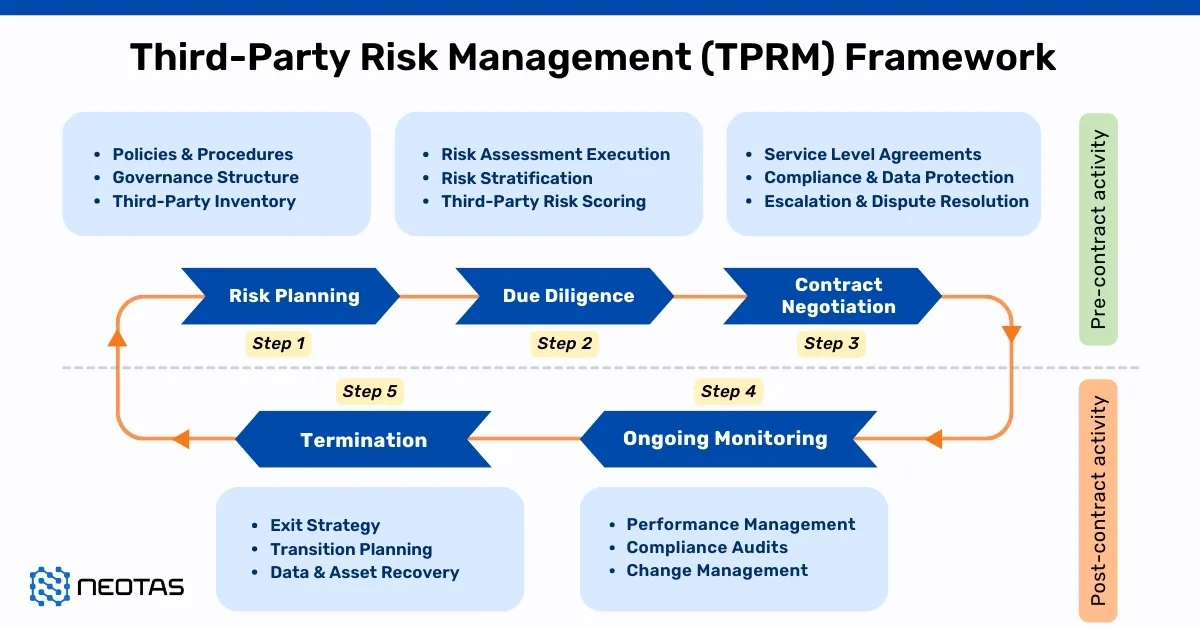
Tiering methodology, due diligence by tier and monitoring cadence, the structure behind a risk-based approved supplier list.
Checklist
Vendor Due Diligence Checklist and Questionnaire →
The questions to ask suppliers at qualification and re-evaluation, grouped by risk area.
Template
Vendor Risk Assessment Template →
Template components, questionnaire, scoring framework and an Excel version for scoring supplier risk.
Guide
21 CFR 820 and FDA QMSR Supplier Change Guide 2026 →
How to handle supplier changes under FDA QMSR when a supplier notifies you of a new site, material, process or sub-supplier.
Guide
Healthcare Supply Chain Risk: The 2026 Framework →
Managing healthcare supply chain risk with a supplier inventory, clinical-impact tiering, due diligence, contract controls and contingency plans.
Guide
Healthcare Vendor Risk Management →
What device manufacturers must document on supplier qualification, and what health systems check when they buy from those manufacturers.
Guide
Third-Party Risk Management Lifecycle →
The full supplier lifecycle from onboarding through monitoring and re-evaluation to offboarding, with the controls each stage needs.
Solution
Healthcare Third-Party Risk Management →
Neotas third-party risk management for healthcare organisations and medical device suppliers: screening, monitoring and an audit trail in one platform.
Solution
Neotas ongoing monitoring watches third parties between reviews and alerts you when their risk profile changes.
Solution
Searches news and archived sources in the original language for fraud, bribery, forced labour and other reports about suppliers and their owners.
Case study
Supplier Due Diligence: Do You Know Who Owns Your Critical Suppliers? →
A Neotas case study on ownership risk in critical medical device suppliers.
More guides, checklists and whitepapers: browse Neotas whitepapers.
References
- ISO. “ISO 13485:2016 Medical devices: Quality management systems: Requirements for regulatory purposes”. International Organization for Standardization. Accessed 11 November 2026. https://www.iso.org/standard/59752.html
- ISO. “ISO 9001 Quality management systems”. International Organization for Standardization. Accessed 11 November 2026. https://www.iso.org/iso-9001-quality-management.html
- European Union. “Regulation (EU) 2017/745 on medical devices”. EUR-Lex, Official Journal of the European Union. Article 10(9) and Annex IX. Accessed 11 November 2026. https://eur-lex.europa.eu/legal-content/EN/TXT/?uri=CELEX:32017R0745
- US Food and Drug Administration. “Quality Management System Regulation (QMSR)”. FDA. Effective 2 February 2026. Accessed 11 November 2026. https://www.fda.gov/medical-devices/postmarket-requirements-devices/quality-system-qs-regulationmedical-device-good-manufacturing-practices
- ECA Academy. “FDA Warning Letter Statistics on Medical Devices in the Past Fiscal Year 2025”. GMP Compliance News, 6 November 2025. Accessed 11 November 2026. https://www.gmp-compliance.org/gmp-news/fda-warning-letter-statistics-on-medical-devices-in-the-past-fiscal-year-2025
- NHS England. “Modern slavery and human trafficking statement for 2025/26”. Covers the National Health Service (Procurement, Slavery and Human Trafficking) Regulations 2025, in force 17 May 2026. Accessed 11 November 2026. https://www.england.nhs.uk/safeguarding/slavery-human-trafficking-statement
- European Union. “Regulation (EU) 2024/3015 on prohibiting products made with forced labour on the Union market”. EUR-Lex. Applies from 14 December 2027. Accessed 11 November 2026. https://eur-lex.europa.eu/legal-content/EN/TXT/?uri=CELEX:32024R3015
- UK Government. “The UK Sanctions List”. GOV.UK. Accessed 11 November 2026. https://www.gov.uk/government/publications/the-uk-sanctions-list
- US Food and Drug Administration. “Warning Letters”. FDA. Accessed 11 November 2026. https://www.fda.gov/inspections-compliance-enforcement-and-criminal-investigations/warning-letters
- UK Government. “Moving to a single list for UK sanctions designations, 28 January 2026”. GOV.UK. Accessed 11 November 2026. https://www.gov.uk/guidance/moving-to-a-single-list-for-uk-sanctions-designations-28-january-2026