
neotas

Ultimate Beneficial Owner (UBO) Meaning, Check & Declaration Form

Ultimate Beneficial Owner identification is about truly understanding who controls or benefits from a business. Ultimate beneficial ownership has become a non-negotiable compliance discipline for financial institutions, corporate governance teams, risk functions, and legal counsel. Yet many organisations struggle to pin down who the true owners or controllers are, especially across complex ownership chains and opaque jurisdictions.

This guide aims to be the reference: a clear, authoritative, and deeply practical manual for identifying the ultimate beneficial owner, conducting UBO checks, drafting UBO declarations, governing internal processes, and navigating edge cases. Whether you are a compliance officer, risk manager, investor, or governance professional, by the end you should have a full toolkit for establishing, maintaining, and defending beneficial ownership transparency.


Part I: Fundamentals of Beneficial Ownership & UBO – Beneficial Ownership Explained

What is an Ultimate Beneficial Owner (UBO)? 

The term beneficial ownership refers to the real economic interest or entitlement to the benefits arising from an asset or entity, irrespective of whose name is on formal titles. In corporate context, beneficial owners are those natural persons who ultimately benefit from or control shares or assets, even when legal ownership is held via intermediaries, nominees, or vehicles.

This distinction is vital: legal ownership may mask the real driver. Nominee shareholders, custodial arrangements, or layered holding companies often stand between the public registers and the person who truly holds influence, receives dividends, or commands decisions.

Beneficial ownership definitions vary. Some frameworks emphasise shareholding thresholds; others emphasise control rights (veto, appointment, board influence). The real concept is mapping not just who holds title, but who really acts, benefits, or controls.

In this guide, “beneficial ownership” is the universe; an “ultimate beneficial owner” is the individual who sits at the apex of control or benefit.

The Ultimate Beneficial Owner (UBO) is the natural person who ultimately owns or controls a legal entity. A UBO check helps reveal hidden ownership, verify control thresholds, and comply with global anti-money laundering (AML) regulations. Learn how to complete a UBO declaration and ensure transparency in beneficial ownership verification.


UBO Full Form and Definition: What Constitutes an Ultimate Beneficial Owner

UBO full form stands for Ultimate Beneficial Owner. That is, the natural person(s) who ultimately own or control a legal entity or arrangement, directly or indirectly, through any ownership or control means.

Key elements to unpack:

  • Natural person: A UBO must be a human being, not another legal entity.
  • Ultimate control or benefit: The person who sits at the end of the chain, enjoys economic benefit, exerts influence, or controls decision-making.
  • Direct or indirect route: The path may run through multiple entities, trusts, partnerships, foundations, etc.
  • Control vs ownership threshold: In many regimes, a threshold of 25 % of shares or voting rights is a default. But control mechanisms or agreements that confer de facto control may override that threshold.

To illustrate: Suppose Entity A owns 40 % of Company X; Entity B owns 60 % of Company X. Entity B is itself owned by Person Y (99 %) and Person Z (1 %). Here, Person Y is a UBO (via B → X). Even if Z holds direct shares, Z’s control is nominal. Moreover, sometimes a person with < 25 % stake can be a UBO if they hold board appointment rights, veto rights, or shareholder agreements that concentrate power.

In short, UBO is always a natural person, and the determinative factor is effective control and benefit, not merely formal percentage.


Ultimate Beneficial Owner UBO Meaning Image: Ultimate Beneficial Owner (UBO) Meaning Explained

A clear understanding of who qualifies as an Ultimate Beneficial Owner (UBO) is central to effective compliance and risk management. The diagram below visually demonstrates how ownership and control can flow through multiple entities before reaching the individuals who ultimately benefit or exert influence.

In practice, the UBO represents the natural person standing at the end of an ownership or control chain — the individual who genuinely benefits from, or exercises control over, a company or legal arrangement. Unlike legal owners (such as holding companies or trusts), a UBO is always a human being and cannot be another corporate entity.

Regulators generally apply a 25 per cent threshold for identifying a UBO. Any individual holding, directly or indirectly, 25 per cent or more of shares or voting rights in a company, or otherwise having the power to exert significant influence over its management, is deemed the ultimate beneficial owner.

The illustration clarifies how this principle works in real structures:

Person A directly owns 30 per cent of Company X and therefore meets the 25 per cent threshold — qualifying as a UBO.

Person B owns 60 per cent of Company Y, which in turn owns 50 per cent of Company X. The indirect ownership calculation (60 % × 50 % = 30 %) means Person B also qualifies as a UBO of Company X.

Person C, despite owning 100 per cent of Company Z, only indirectly holds 20 per cent of Company X (100 % × 20 %) and therefore does not qualify as a UBO under the 25 per cent rule.

This simplified chain shows that beneficial ownership extends beyond what appears on a company’s share register. It requires tracing each layer of ownership until the natural persons benefiting from or controlling the entity are identified.

However, thresholds alone do not tell the full story. Even if an individual’s shareholding falls below 25 per cent, they may still be considered a UBO if they exercise effective control — for example, through board appointment rights, veto powers, or shareholder agreements that influence corporate policy.

Identifying the ultimate beneficial owner is not a mechanical percentage exercise but a substantive assessment of control, benefit, and influence. Recognising these nuances enables compliance officers and governance leaders to apply a risk-based, defensible approach that withstands regulatory scrutiny and reinforces organisational transparency.


Part II: Why UBO Matters — Risk, Regulatory Imperatives & Costs

Regulatory Imperatives: UBO in Global Compliance Frameworks

The drive for beneficial ownership transparency is no fad — it is embedded in the international financial crime framework.

  • FATF (Financial Action Task Force): Its Recommendations compel jurisdictions to require legal persons to maintain adequate, accurate, and up-to-date beneficial ownership information, and enable competent authorities to access it. Ref: FATF
  • EU AML Directives: The EU’s 4AMLD, 5AMLD and now 6AMLD progressively pushed member states to create UBO registers, stricter verification, and penalties for non-compliance.
  • U.S. Corporate Transparency Act (CTA): Requires reporting of beneficial ownership information (BOI) to FinCEN for eligible entities, with fines for non-reporting.
  • UK PSC (Persons of Significant Control) register: Companies are obliged to maintain, and in many cases publish, registers of individuals with significant control, which often align with UBO concepts.
  • Other jurisdictions: Singapore, Hong Kong, UAE, South Africa, Canada, and others have introduced or expanded UBO disclosure regimes.

Regulators now expect institutions to verify UBOs, not merely request them. Failure to do so, or reliance on weak evidence, invites enforcement.

Case studies of fines and reputational damage are abundant: banks failing to detect shell-company ownership leading to sanctions violations; corporates acquired by hidden beneficial beneficiaries flagged for laundering risk. These offer cautionary lessons.


Risks & Costs of Poor UBO Disclosure / Verification

Poor UBO diligence carries multi-faceted risks:

  • Legal & regulatory: Fines, sanctions, forced unwinds, license revocations.
  • Reputational: Loss of trust among shareholders, clients, capital markets. Once an entity is linked to illicit ownership, recovery is costly.
  • Operational disruption: KYC rework, delays in onboarding counterparties, internal investigations.
  • Financial: Asset freezes, clawbacks, litigation.
  • Strategic: M&A deals collapse if counterparty ownership is unresolved.

For example, the Panama Papers and Pandora Papers revealed many high-net-worth individuals hiding ownership via shell companies. Financial institutions caught on the wrong side of those exposures faced regulatory scrutiny and heavy media coverage.

Thus, UBO is not just compliance tick-box — it is a core risk control.


Part III: Conducting an Ultimate Beneficial Owner Check

Before identifying the ultimate beneficial owner, it is essential to follow a structured, evidence-based process. Each stage builds upon the previous one — from mapping ownership to verifying identity — ensuring accuracy, traceability, and regulatory compliance. The following steps outline a practical framework for conducting a thorough UBO check from start to finish.

Step-by-Step Framework for UBO Verification

Step 1: Data Collection & Ownership Mapping

Begin with gathering all available corporate documents: incorporation papers, shareholder registers, articles, amendments, shareholder agreements, trust deeds, foundation documents, prior KYC/KYB logs. Request a UBO full disclosure from your counterparty: list all natural persons who own or control, with percentages, role, and contact information.

Initiate mapping: build the ownership “tree” — list all legal entities in the chain, each layer’s owners, and interconnections.

Step 2: Chain Resolution & Entity Traversal

Trace through intermediaries: holding companies, special purpose vehicles (SPVs), partnerships, trusts, foundations, nominee structures. For each layer, apply the same process: who are the owners or controllers.

Pay particular attention to blind trusts, bearer instruments, offshore vehicles and shell companies used to mask ownership. Use public registries, corporate databases, and investigative tools to dig into each layer.

Step 3: Control Analysis

Ownership percentage is one criterion, but control is often exercised via non-share mechanisms. Assess:

  • Voting rights and share classes (some shares carry special rights)
  • Appointment or removal rights for directors
  • Veto powers, supermajority clauses
  • Shareholder agreements, proxies, nominee arrangements
  • De facto influence: if a person acts as de facto decision-maker (e.g. in small family business)

Where someone has less than threshold ownership but clear power, they should be classed as UBO.

Step 4: Identity Verification & Cross-Checks

Once candidate natural persons are identified, verify their identity:

  • Government-issued ID documents (passport, national ID)
  • Proof of address (utility bills, bank statements)
  • Sanctions, watchlist search, adverse media, PEP screening
  • Cross-check against corporate registry, beneficial ownership databases, public sources
  • Use digital identity and verification services where applicable

Ensure reasonable assurance that the natural person is who they claim to be.

Step 5: Documentation & Audit Trail

Maintain a robust audit trail: copies of documents, dates of access, who reviewed, how discrepancies were resolved. Use versioning and chain-of-custody controls. Retain metadata on checks, sources, and cross-references.

Step 6: Continuous Monitoring & Refresh

Ownership and control change over time. Establish triggers for re-check: corporate events, capital increases, board changes, mergers, acquisitions, capital infusion. Periodic updates (e.g. annually) and real-time alerting for ownership changes are best practice.

Tools, Sources & Techniques for UBO Checks

  • Public registries: national corporate registries, beneficial ownership registers.

  • Commercial databases: entity resolution engines, credit bureaus, corporate intelligence vendors.

  • OSINT and investigative tools: media scans, leak databases, trade registries.

  • AI/ML-based matching: name disambiguation, entity clustering, linkage graphs.

  • APIs & data integrations: feed registry data into compliance systems for automated checks.

Challenges: incomplete registries, non-standardised data, restricted access, language barriers, privacy laws. For opaque jurisdictions, reliance on commercial providers or legal cooperation may be necessary.

When to Use Enhanced Due Diligence (EDD)

If entities or persons operate in high-risk jurisdictions (low transparency, weak rule of law), or if structures are complex (multiple layers, trusts, nominee arrangements), you escalate to Enhanced Due Diligence.

EDD may involve:

  • Requesting more documentation (trust deeds, ultimate agreement texts)
  • Conducting interviews with beneficial owners
  • On-site visits or third-party verification
  • Independent review or legal opinion
  • More frequent refresh cycles


Define clear escalation criteria in policy (e.g. any UBO in a sanctioned country triggers EDD).

UBO Identification Workflow UBO Identification Workflow


Part IV: UBO Declaration, Policy & Governance

Crafting an Effective UBO Declaration Process

A UBO declaration is a formal statement, often a signed form, wherein the legal entity declares who its ultimate beneficial owners are, with facts, percentages, roles, dates, and attestations.

Key fields to include:

  • Name, date of birth, nationality, address
  • Ownership stake (% shareholding, voting rights)
  • Nature of control (e.g. direct share, indirect, board influence)
  • Date of declaration
  • Notification clause: obligation to update changes
  • Signature and legal attestation

Best practice: versioned declarations, signed annually or when change occurs. If the counterparty refuses or fails to provide, your policy must define fallback (e.g. reject onboarding or limit relationship under conditional terms).

Internal Policies, Governance & Controls Around UBO

Embed UBO checks into KYC / KYB / onboarding workflows. Typical roles:

  • Compliance team: owns methodology, reviews exceptions
  • Risk team: sets thresholds and escalation
  • Legal / governance: ensures formal declarations and enforceability
  • Audit / assurance: periodic review of UBO compliance

Your policy should define escalation paths, exception handling, oversight committees, and regular audits. Use metrics: % of entities with verified UBOs, age of data, exception counts, number of manual escalations. Training and internal awareness are essential.

Part V: Complex Ownership Structures & Edge Cases

Complex Structures and Common Evasion Techniques

Entities use elaborate structures to obscure UBOs:

  • Multi-layered holding companies across jurisdictions
  • Nominee shareholders / directors
  • Trusts, foundations, fiduciary vehicles
  • Circular ownership (A owns B, B owns C, C owns A)
  • Special share classes or preferential voting rights
  • Proxy voting or shareholder agreement control

Recognising these requires critical thinking, pattern recognition, and cross-jurisdictional competence.

Jurisdictional & Legal Constraints

Some jurisdictions impose privacy or data protection laws that limit disclosure of beneficial ownership. Others do not maintain public registers. Where legal restrictions exist, you must balance compliance, risk, and feasibility.

Cross-border mutual legal assistance treaties, automatic data exchange (e.g. within the EU), and investment treaties may assist. But be aware of legal conflicts: local privacy law may limit disclosing personal data outward.

What If the UBO Cannot Be Identified or Refuses to Declare?

If no one can be reliably judged UBO, or the counterparty refuses to declare, your policy must allow:

  • Risk acceptance with mitigation: limited transactions, restrictions, higher scrutiny
  • Conditional acceptance: small exposure, strict monitoring
  • Rejection or termination: for very high-risk cases

Whatever path, document rationale, retain audit trail, escalate to senior control.

Part VI: Emerging Trends, Innovations & Future Outlook

Technological Advances in UBO Identification

  • AI / machine learning & graph analytics: detecting hidden relationships, anomaly detection
  • Verifiable credentials & blockchain: claims of ownership verified cryptographically
  • Cross-registry interoperability / open data initiatives: aggregated beneficial ownership registries
  • Digital identity frameworks / decentralised identifiers: consistent identity across systems

Use of these technologies helps overcome opaque data, improves automation, and reduces human error.

Regulatory Evolution & Trends

  • More jurisdictions moving to public beneficial ownership registers
  • Expanding scope: beneficial ownership of digital assets, crypto, virtual companies
  • Tighter auditability, standardisation, data sharing between authorities
  • ESG & investor pressures: beneficial ownership transparency as expected governance standard

Best Practice Benchmarks & Maturity Models

Organisations typically evolve through stages:

  • Ad hoc: reactive, manual, fragmentary
  • Standardised: formal process, defined roles, policies
  • Proactive & continuous: real-time alerts, integration, automated refresh, predictive risk scoring

KPIs and metrics to monitor:

  • Percentage of clients/entities with verified UBO
  • Age of verification data
  • Exception processing time & count
  • Number of escalations & outcomes
  • False negatives / remediation actions

Comparisons: banks, fintechs, private equity firms maintain high coverage; newer disciplines like third-party risk are catching up.

Perspective: Embedding UBO Verification as a Governance Standard

For modern institutions, the verification of the ultimate beneficial owner has evolved far beyond a compliance checkpoint. It now represents a critical pillar of corporate governance, financial integrity, and stakeholder confidence. The ability to see through opaque structures is not merely a regulatory expectation — it is a reflection of how responsibly an organisation understands who it is doing business with.

Effective UBO identification requires a disciplined methodology: mapping ownership layers, assessing control mechanisms, validating identities, and maintaining audit-ready documentation. Organisations that integrate these steps into a coherent governance framework position themselves to detect risk early, meet regulatory scrutiny with confidence, and operate with transparency that builds market trust.

In an environment of increasing accountability, beneficial ownership transparency is not a burden but a strategic differentiator. Institutions that embed rigorous UBO practices into their due diligence and decision-making processes will be better equipped to manage cross-border risks, strengthen investor assurance, and demonstrate genuine leadership in ethical business conduct.
Neotas

Manage Financial Compliance and Business Risk with Neotas AML Solutions.

Neotas is an Enhanced Due Diligence Platform that leverages AI to join the dots between Corporate Records, Adverse Media and Open Source Intelligence (OSINT).

🗓️ Schedule a Call or Book a Demo of Neotas Anti-money laundering (AML) Solutions.

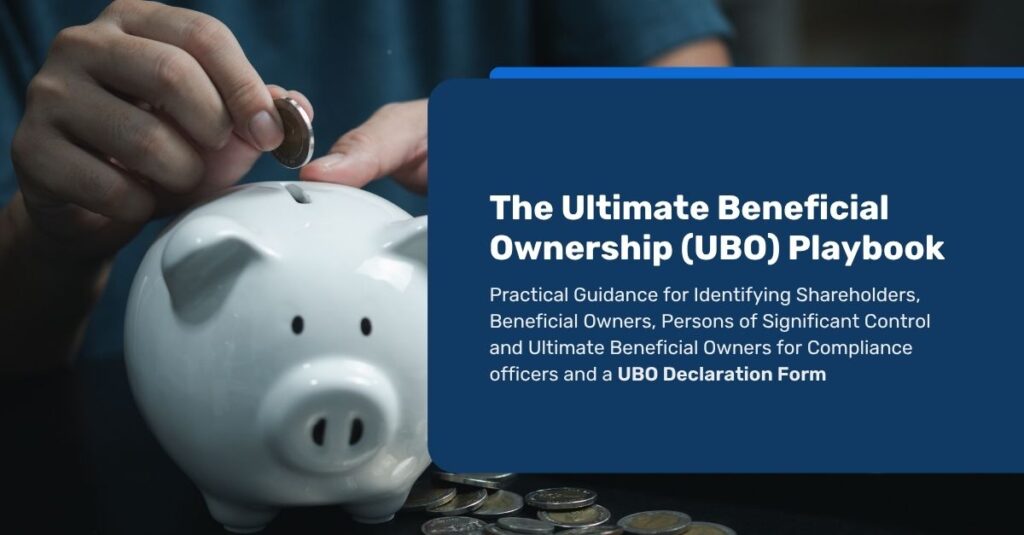
Download the Ultimate Beneficial Ownership (UBO) Playbook

Access the complete whitepaper that compliance leaders rely on to uncover hidden ownership, verify control chains, and ensure full audit readiness under FATF, FinCEN, and EU AMLD standards.

FAQs on Ultimate Beneficial Ownership (UBO)

UBO stands for Ultimate Beneficial Owner, referring to the natural person who ultimately owns or controls a company, trust, or other legal entity. UBO identification is a core requirement under global AML (Anti-Money Laundering) and ABC (Anti-Bribery and Corruption) regulations.

A shareholder is the legal owner of shares in a company. A beneficial owner is the person who enjoys the economic benefit of those shares, even if held through intermediaries. The ultimate beneficial owner is the final natural person at the top of the ownership or control chain — the one who truly controls or benefits from the entity.

Most jurisdictions, including those aligned with FATF and EU AMLD, use a 25 per cent threshold of ownership or voting rights to determine UBO status. However, any individual exercising significant influence or control — even below 25 per cent — may also be classified as a UBO.

UBO transparency prevents the misuse of corporate structures for money laundering, corruption, or sanctions evasion. Regulators expect firms to demonstrate they know who they are dealing with — ensuring no hidden owners, sanctioned individuals, or politically exposed persons (PEPs) are involved.

A UBO declaration typically includes each owner’s full name, date of birth, nationality, country of residence, percentage ownership, nature of control, and whether they are a PEP. Supporting documents such as ID and proof of address are often required for verification.

A UBO check involves mapping all ownership layers, tracing direct and indirect shareholders, identifying the natural persons behind entities, and verifying their identities through reliable, independent sources. The process must be documented, auditable, and periodically refreshed.

Global UBO requirements derive from FATF Recommendations 10 and 24, EU AML Directives (4AMLD–6AMLD), the U.S. Corporate Transparency Act, FinCEN’s CDD Rule, and equivalent frameworks from regulators such as MAS (Singapore) and FCA (UK).

Common challenges include complex multi-jurisdictional structures, nominee shareholders, offshore entities, opaque trusts, and jurisdictions lacking public registers. Language barriers and inconsistent disclosure standards also hinder transparency and verification.

Red flags include:

  • Ownership chains involving secrecy jurisdictions
  • Frequent changes in ownership or directors
  • Nominee or proxy shareholders
  • UBOs linked to PEPs or sanctioned individuals
  • Entities with no clear economic purpose

Each of these should trigger enhanced due diligence (EDD).

UBO information should be reviewed annually at minimum, or sooner if there are triggering events such as ownership changes, mergers, capital increases, or regulatory updates. Continuous monitoring through automated alerts is considered best practice.

If a customer refuses to provide UBO information or gives incomplete declarations, regulated entities must treat the relationship as high-risk, apply enhanced due diligence, or decline the relationship altogether. Documentation of all efforts to obtain information is mandatory.

Modern compliance platforms leverage AI, machine learning, and graph analytics to connect ownership data, identify hidden relationships, and detect anomalies faster than manual methods. Integration with registries and watchlists ensures ongoing UBO monitoring and audit readiness.

A Person of Significant Control (PSC) is a UK-specific term referring to individuals who hold significant ownership or control over a company — typically overlapping with UBO definitions. PSC registers form part of the UK’s approach to beneficial ownership transparency.

Legal ownership exists when a person or entity’s name appears on official company documents. Beneficial ownership refers to the person who actually controls or benefits from the asset, even if another entity holds it in name. Identifying both is essential for complete transparency.

Penalties vary by jurisdiction but can include regulatory fines, criminal prosecution, licence suspension, and reputational damage. Repeated non-compliance under FATF, FinCEN, or AMLD frameworks may result in enforcement actions and public censure.

financial crime compliance
financial crimes compliance
what is financial crime compliance
financial crime and compliance
financial crime and compliance management
financial crime compliance jobs
financial crime compliance solutions
financial crimes compliance jobs
compliance and financial crime
cost of financial crime compliance
enterprise financial crimes compliance
fcc financial crime compliance 
anti financial crime compliance
conduct financial crime and compliance

financial crime compliance analyst
financial crime compliance analyst salary
financial crime compliance certification
financial crime compliance course
financial crime compliance definition
financial crime compliance framework
financial crime compliance in banking
financial crime compliance meaning
financial crime compliance risk management
global financial crimes compliance
true cost of financial crime compliance global report
what is financial crimes compliance

Share:

LinkedIn
Facebook
Twitter
WhatsApp
Email
Picture of Neotas Enhanced Due Diligence

Neotas Enhanced Due Diligence

Neotas Enhanced Due Diligence covers 600Bn+ Archived web pages, 1.8Bn+ court records, 198M+ Corporate records, Global Social Media platforms, and more than 40,000 Media sources from over 100 countries to help you screen & manage risks.

📌 Download the Ultimate Beneficial Ownership (UBO) Playbook

Practical Guidance for Identifying Shareholders, Beneficial Owners, Persons of Significant Control and Ultimate Beneficial Owners for Compliance officers in AML and ABC

aml compliance checklist
aml compliance program
aml and bsa
aml ctf
aml and ctf
anti money laundering integration
fatf money laundering
bsa aml
money laundering transaction monitoring
aml transaction monitoring
anti money laundering transaction monitoring
aml checks
aml check
anti money laundering checks
aml checks uk
anti-money laundering check
money laundering checks
anti-money laundering checks
what is aml checks
money laundering check
what is an anti money laundering check
anti money laundering check
anti money laundering compliance
anti money laundering checks
aml and compliance
aml checks
anti-money laundering compliance
aml check
anti money laundering compliance
anti money laundering checks uk
what is an aml check
anti money laundering checks by banks
kyc checks
kyc compliance
kyc check
know your customer
know your customer checks
know your customer meaning
know your client
know your client regulations
aml kyc
what is anti money laundering
kyc requirements
aml money laundering
kyc regulations
anti money laundering regulations
aml regulations
money laundering regs
aml finance
aml compliance
aml regs
aml and compliance
know your customer compliance
kyc and compliance
money laundering laws
anti-money laundering compliance
types of anti money laundering
aml system
anti money laundering types
law for money laundering
anti money laundering
aml comply
kyc aml
aml in banking
aml requirements
aml procedures
anti money laundering requirements
anti money laundering in banking
anti money laundering procedures
kyc and aml compliance
kyc money laundering
aml reports
aml kyc process
anti money laundering and compliance
kyc aml compliance
kyc aml procedures
money laundering process
aml integration
aml risk assessment
banks and money laundering
money laundering risk
anti money laundering investigation
aml check meaning
what are aml checks
aml checks meaning
aml search
aml checker
anti money laundering search
aml check online
money laundering
cash laundering
laundering
anti money laundering checks for estate agents
anti money laundering audit
anti money laundering companies
bank money laundering
aml data
anti money laundering compliance program
aml check estate agents
money laundering checks for estate agents
anti money laundering finance
anti money laundering services
aml
aml audit
bsa banking
anti money laundering consultant
aml sanctions
aml insurance
aml sanctions screening
peps money laundering

anti money laundering checks
aml finance
aml and compliance
aml checks
aml compliance
anti-money laundering compliance
aml check
anti money laundering compliance

aml checks
aml check
anti money laundering checks
aml checks
money laundering checks
aml check meaning
anti-money laundering check
aml checks uk
anti-money laundering checks
what are aml checks
what is aml checks
aml checks meaning
money laundering check
what is an anti money laundering check
anti money laundering check
aml search
anti money laundering compliance
kyc
what is kyc verification
kyc compliance
kyc meaning
kyc verification
kyc identity verification
what is kyc
know your customer
know your client
kyc know
kyc definition
what are kyc
kyc documents
kyc process
what is know your customer
kyc aml
kyc know your client
kyc requirements
kyc what
know your customer requirements
kyc customer
kyc means
what is a kyc
what is kyc in banking
what does kyc mean
micromerchant
kyc software
kyc/aml
define kyc
kyc check
kyc services
kyc checks
kyc banking
bank know your customer
know your customer regulations
kyc document
kyc required
kyc regulations
meaning of know your customer
know your customer banking
kyc full form
kyc in banking
know your customer bank
know your customer rule
kyc meaning in banking
know your customer process
what does kyc stand for
know your customer news
know your client regulations
kyc information
kyc procedure
aml kyc
kyc and aml
kyc verification meaning
kyc due diligence
whats kyc
kyc know your customer
kyc law
kyc finance
aml kyc meaning
know your customer laws
aml and kyc
kyc requirements for banks
aml/kyc
aml check
kyc laws
corporate secrecy
kyc bank
how to launder cash

anti money laundering
aml
money laundering
cash laundering
laundering
bsa banking
law for money laundering
aml compliance
anti money laundering compliance
aml and compliance
anti money laundering and compliance
aml comply
aml checks
kyc aml
anti money laundering checks
anti money laundering regulations
aml finance
aml regulations
aml ctf
anti money laundering finance
aml and ctf
aml integration
aml regs
anti money laundering integration
bsa aml
aml and bsa
kyc compliance
aml in banking
know your customer compliance
anti money laundering in banking
money laundering regs
fatf money laundering
aml transaction monitoring
anti money laundering transaction monitoring
aml requirements
anti money laundering requirements
anti money laundering consultant
bank money laundering
banks and money laundering
aml audit
aml risk assessment
aml procedures
anti money laundering audit
anti money laundering procedures
aml reports
kyc aml compliance
kyc and aml compliance
anti money laundering services
anti money laundering companies
anti money laundering investigation
aml compliance program
aml kyc process
anti money laundering compliance program
kyc aml procedures
peps money laundering
anti money laundering checks for estate agents
aml insurance
aml sanctions
aml check estate agents
aml data
money laundering checks for estate agents
money laundering risk
aml checks uk
anti money laundering checks uk
money laundering checks
aml compliance checklist
aml sanctions screening
kyc money laundering

aml
aml audit
aml insurance
aml sanctions
aml sanctions screening
anti money laundering consultant
anti money laundering services
bsa banking
peps money laundering

aml and bsa
aml compliance checklist
aml compliance program

aml and ctf
aml ctf
anti money laundering integration
bsa aml
fatf money laundering

aml transaction monitoring
anti money laundering transaction monitoring
money laundering transaction monitoring

aml and compliance

aml check
aml checks
aml checks uk
aml compliance
aml comply
aml finance
aml in banking
aml kyc
aml kyc process
aml money laundering
aml procedures
aml regs
aml regulations
aml reports
aml requirements
aml system
anti money laundering
anti money laundering check
anti money laundering checks

anti money laundering checks by banks
anti money laundering checks uk
anti money laundering compliance
anti money laundering in banking
anti money laundering procedures
anti money laundering regulations
anti money laundering requirements
anti money laundering types
anti-money laundering check
anti-money laundering checks
anti-money laundering compliance

know your client KYC
know your client regulations
know your customer KYC
know your customer checks
know your customer compliance
know your customer meaning
kyc aml
kyc aml compliance
kyc aml procedures
kyc and aml compliance
kyc and compliance
kyc check
kyc checks
kyc compliance
kyc money laundering
kyc regulations
kyc requirements
law for money laundering
money laundering check
money laundering checks
money laundering laws
money laundering regs
types of anti money laundering
what is aml checks
what is an aml check
what is an anti money laundering check
what is anti money laundering

aml integration
money laundering process

aml risk assessment
anti money laundering investigation
banks and money laundering
money laundering risk

aml check estate agents
aml check meaning
aml check online
aml checker
aml checks meaning
aml data
aml search
anti money laundering audit
anti money laundering checks for estate agents
anti money laundering companies
anti money laundering compliance program
anti money laundering finance
anti money laundering search
bank money laundering
cash laundering
laundering
money laundering
money laundering checks for estate agents
what are aml checks

Mitigate Business Risk with Neotas Platform

We leverage Open source intelligence (OSINT) to use publicly available data to provide organisations with hyper-accurate and fully auditable insights with no false positives.

Improve Efficiencies

Improve analyst efficiencies, including cost and time reduction of minimum 25% with zero false positives.

Reduce Blindspots

The FCA recommends open source Internet checks as best practice (FG 18/5). Manage and reduce risk by incorporating 100% of online sources into your processes.

Ongoing Monitoring

Manage risk with hyper accurate ongoing monitoring. We will monitor 100% of publicly available online data to help identify relevant risks.

Book A Demo