Enhance your vendor due diligence process with Neotas. Our rigorous analysis minimises risks, expedites sales, and increases value creation. Gain buyer confidence through objective assessments.
Enhance your vendor due diligence process with Neotas. Our rigorous analysis minimises risks, expedites sales, and increases value creation. Gain buyer confidence through objective assessments.
The primary purpose of Vendor Due Diligence is to address questions and concerns that potential buyers may have regarding the financial aspects of the business.
The VDD process involves in-depth analyses of financial and tax-related matters. The findings are then presented to the seller and summarised in a report that is shared with potential buyers.
By conducting a VDD, the seller aims to provide clear and concise financial information to potential buyers. This transparency helps in building confidence and providing insight into the business's financial health and growth prospects.
The review is typically conducted by independent specialists who work alongside the company's management and their financial advisors. This impartiality ensures that relevant opportunities and challenges are identified objectively.
Vendor Due Diligence (VDD) is a specialised approach to due diligence that shifts the perspective from the seller to the buyer. It involves a rigorous analysis of assets that are slated for sale, helping companies minimise risks, expedite the sales process, and enhance overall value creation. Vendor Due Diligence (VDD) is a financial review process conducted on behalf of a seller to provide potential buyers with a comprehensive understanding of the business being sold.
The primary objectives of Vendor Due Diligence (VDD) are to provide a comprehensive and objective assessment of a business being sold from the seller’s perspective.
Here are the key objectives:
Gain buyer trust, identify risks, set realistic expectations, and address valuation-affecting issues in advance for seamless transactions.
Vendor Due Diligence plays a crucial role in facilitating a transparent and efficient sales process, benefiting both the seller and potential buyers. It allows for a more informed and confident decision-making process for all parties involved.
Vendor Due Diligence (VDD) encompasses various types, each focusing on specific aspects of a business. Here are some common types of Vendor Due Diligence:
The specific types of due diligence conducted may vary depending on the nature of the transaction, industry, and the goals of the parties involved. Often, a combination of these due diligence types is conducted to provide a comprehensive assessment of the target company.
Vendor Due Diligence imposes responsibilities on both the third-party auditor and the target company, covering a spectrum of vital business considerations, including AML/CFT-specific factors. The processes and information required for VDD encompass:
In addition, AML-related due diligence may involve:
From an AML perspective, conducting site visits may be necessary to verify the implementation of specific AML procedures and protections. Validating the legitimacy of a company’s relationships, clients, and customers through direct communication is a crucial due diligence step for verifying money laundering risk.
In certain cases, vendors may be required to complete a due diligence questionnaire to further clarify or corroborate aspects of the audit.
Vendor Due Diligence (VDD) involves a comprehensive evaluation process, and following best practices ensures its effectiveness. Here are some key Vendor Due Diligence best practices:
Preparing for Vendor Due Diligence (VDD) involves defining clear objectives, meticulous data collection, engaging expert evaluators, and verifying compliance. Scrutinise contracts, assess financial health, and ensure data security. Regular monitoring is key to maintaining an accurate risk profile throughout the process.
Thorough Data Verification: Ensure all provided information is accurate, complete, and up-to-date to establish trust and transparency.
Early Risk Identification: Proactively identify and address potential risks to mitigate any issues that may arise during the due diligence process.
Strategic Integration Planning: Develop a comprehensive plan for seamlessly integrating the target company’s operations post-acquisition, ensuring a smooth transition.
Neotas offers a comprehensive Vendor Due Diligence (VDD) service, providing you with a strategic advantage. Our expert team conducts rigorous analysis to assess assets destined for sale, minimising risks, accelerating the sales process, and ultimately maximising value creation. With Neotas, you’re equipped to make confident, informed decisions, ensuring the success of your transaction.
Improve analyst efficiencies, including cost and time reduction of minimum 25% with zero false positives.
The FCA recommends open source Internet checks as best practice (FG 18/5). Manage and reduce risk by incorporating 100% of online sources into your processes.
Manage risk with hyper accurate ongoing monitoring. We will monitor 100% of publicly available online data to help identify relevant risks.
Our clients can choose to use our advanced technology to interrogate vast data sources using their own methodologies. Our team of in-house expert analysts can also produce reports for you.
Vendor Due Diligence (VDD) is a comprehensive evaluation process conducted by a seller on a business object before a sale. It offers potential buyers a clear understanding of the target company’s financial health, operational efficiency, and potential risks. VDD aims to provide transparency and build confidence by presenting an unbiased assessment from a buyer’s perspective.
Vendor Due Diligence is crucial because it minimises risks for potential buyers. It offers an independent and objective assessment, ensuring that buyers have a clear understanding of the target company’s financial status, potential risks, and growth opportunities. This transparency fosters trust and facilitates smoother transactions.
Due diligence is essential when engaging with external vendors to assess their reliability, financial stability, and adherence to legal and regulatory requirements. It helps businesses make informed decisions about selecting vendors, mitigating potential risks, and ensuring a mutually beneficial and secure business relationship.
Vendor Due Diligence should be initiated as early as possible in the sale process. It’s advisable to start before negotiations with potential buyers or partners begin. This allows for a thorough evaluation and provides ample time to address any identified issues.
Typically, the seller is responsible for covering the costs associated with Vendor Due Diligence. However, in some cases, especially in competitive markets, the buyer may share or cover the expenses to expedite the process.
A Vendor Due Diligence questionnaire allows for standardized information gathering from the target business. It helps in obtaining specific details needed for evaluation, ensuring consistency in the assessment.
Important questions in a Vendor Due Diligence questionnaire cover areas like financial performance, legal compliance, operational efficiency, market positioning, and potential risks or opportunities for the target company.
Customer Due Diligence (CDD) verifies customer identities and assesses financial activities to prevent money laundering. Vendor Due Diligence (VDD) is seller-focused, evaluating a company’s suitability for sale or partnership through financial, legal, and market assessments for informed business transactions.
Operational Due Diligence (ODD) assesses a company’s operational efficiency and processes. It scrutinizes areas like supply chain, IT systems, and compliance. Vendor Due Diligence (VDD) is seller-focused, evaluating financial health, legal compliance, and market position to provide potential buyers with a transparent overview for smoother transactions.
A Vendor Due Diligence Report is a detailed document summarising the findings of the VDD process. It encompasses crucial information about the target company, including its financial statements, legal compliance, operational efficiency, and potential risks. This report serves as a valuable resource for potential buyers, enabling them to make informed decisions about the acquisition.
Due Diligence report typically includes:
A Vendor Due Diligence report provides a comprehensive summary of the evaluation process, offering potential buyers a detailed understanding of the target business’s strengths, weaknesses, and potential areas for improvement.
A Vendor Due Diligence report typically includes findings related to financial performance, legal and regulatory compliance, operational assessments, market analysis, risk evaluation, and recommendations for potential buyers.
Vendor Due Diligence provides several advantages for the selling company, including increased control over the process, identification of risks and opportunities, setting realistic expectations, and the ability to address any issues that may impact the business’s valuation in advance.
In M&A transactions, Vendor Due Diligence helps streamline the process by providing potential buyers with a comprehensive understanding of the business. It expedites negotiations and reduces the likelihood of surprises, ultimately leading to smoother and more successful transactions.
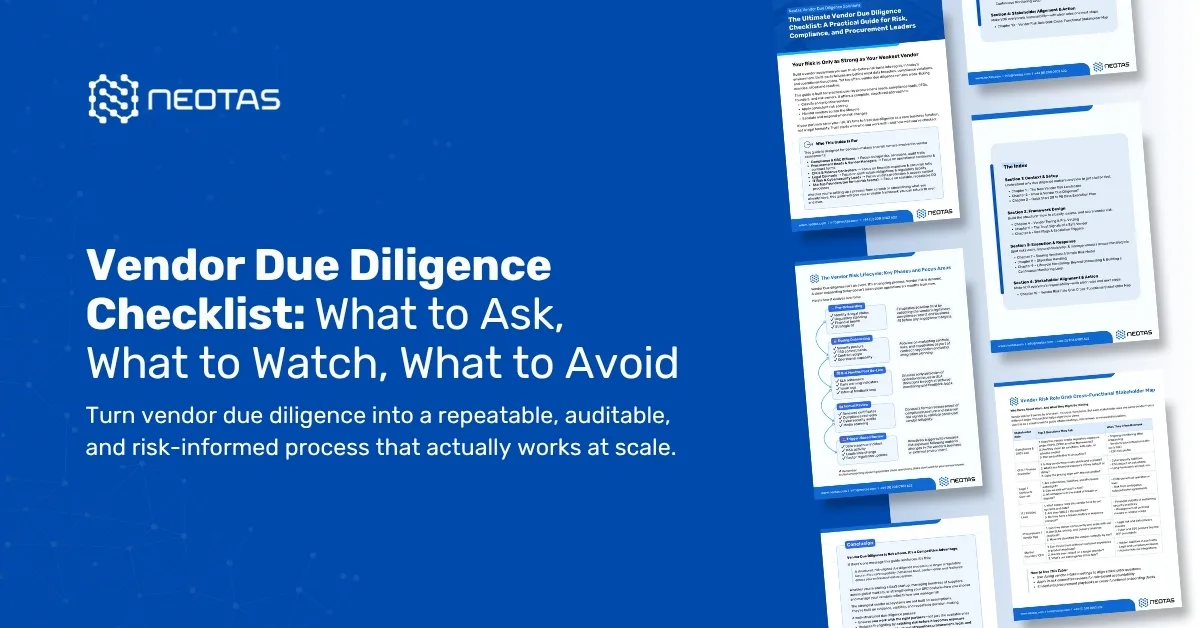
A Vendor Due Diligence checklist serves as a structured guide for assessing various aspects of a target business, ensuring that critical information is systematically reviewed during the due diligence process.
A comprehensive Vendor Due Diligence checklist typically includes items like financial statements, legal documents, operational assessments, market analysis, risk evaluation, and recommendations for potential buyers.
Explore How Our Comprehensive VDD Can Optimise Your Business Transactions Today!
| Cookie | Duration | Description |
|---|---|---|
| AWSALBTG | 7 days | AWS Application Load Balancer Cookie. Load Balancing Cookie: Used to encode information about the selected target group. |
| AWSALBTGCORS | 7 days | AWS Classic Load Balancer Cookie: Used to map the session to the instance. This cookie is identical to the original ELB cookie except for the attribute &SameSite=None; |
| cookielawinfo-checkbox-advertisement | 1 year | Set by the GDPR Cookie Consent plugin, this cookie is used to record the user consent for the cookies in the "Advertisement" category . |
| cookielawinfo-checkbox-analytics | 11 months | This cookie is set by GDPR Cookie Consent plugin. The cookie is used to store the user consent for the cookies in the category "Analytics". |
| cookielawinfo-checkbox-functional | 11 months | The cookie is set by GDPR cookie consent to record the user consent for the cookies in the category "Functional". |
| cookielawinfo-checkbox-necessary | 11 months | This cookie is set by GDPR Cookie Consent plugin. The cookies is used to store the user consent for the cookies in the category "Necessary". |
| cookielawinfo-checkbox-others | 11 months | This cookie is set by GDPR Cookie Consent plugin. The cookie is used to store the user consent for the cookies in the category "Other. |
| cookielawinfo-checkbox-performance | 11 months | This cookie is set by GDPR Cookie Consent plugin. The cookie is used to store the user consent for the cookies in the category "Performance". |
| CookieLawInfoConsent | 1 year | Records the default button state of the corresponding category & the status of CCPA. It works only in coordination with the primary cookie. |
| debug | never | Cookie used to debug code and website issues |
| shown | session | Session cookie to control number of times a pop up is shown. |
| viewed_cookie_policy | 11 months | The cookie is set by the GDPR Cookie Consent plugin and is used to store whether or not user has consented to the use of cookies. It does not store any personal data. |
| Cookie | Duration | Description |
|---|---|---|
| __cf_bm | 30 minutes | This cookie, set by Cloudflare, is used to support Cloudflare Bot Management. |
| AnalyticsSyncHistory | 1 month | Used to store information about the time a sync took place with the lms_analytics cookie |
| bcookie | 2 years | LinkedIn sets this cookie from LinkedIn share buttons and ad tags to recognize browser ID. |
| bscookie | 2 years | LinkedIn sets this cookie to store performed actions on the website. |
| lang | session | LinkedIn sets this cookie to remember a user's language setting. |
| lidc | 1 day | LinkedIn sets the lidc cookie to facilitate data center selection. |
| UserMatchHistory | 1 month | LinkedIn sets this cookie for LinkedIn Ads ID syncing. |
| Cookie | Duration | Description |
|---|---|---|
| li_gc | 2 years | Used to store consent of guests regarding the use of cookies for non-essential purposes |
| rl_anonymous_id | 1 year | Generates an unique anonymous Id to identify a user and attach to a subsequent event. |
| rl_user_id | 1 year | to store a unique user ID for the purpose of Marketing/Tracking |
| Cookie | Duration | Description |
|---|---|---|
| _ga | 2 years | The _ga cookie, installed by Google Analytics, calculates visitor, session and campaign data and also keeps track of site usage for the site's analytics report. The cookie stores information anonymously and assigns a randomly generated number to recognize unique visitors. |
| _gat_gtag_UA_107495977_1 | 1 minute | Set by Google to distinguish users. |
| _gat_UA-107495977-1 | 1 minute | A variation of the _gat cookie set by Google Analytics and Google Tag Manager to allow website owners to track visitor behaviour and measure site performance. The pattern element in the name contains the unique identity number of the account or website it relates to. |
| _gcl_au | 3 months | Provided by Google Tag Manager to experiment advertisement efficiency of websites using their services. |
| _gid | 1 day | Installed by Google Analytics, _gid cookie stores information on how visitors use a website, while also creating an analytics report of the website's performance. Some of the data that are collected include the number of visitors, their source, and the pages they visit anonymously. |
| attribution_user_id | 1 year | This cookie is set by Typeform for usage statistics and is used in context with the website's pop-up questionnaires and messengering. |
| CONSENT | 2 years | YouTube sets this cookie via embedded youtube-videos and registers anonymous statistical data. |
| Cookie | Duration | Description |
|---|---|---|
| _fbp | 3 months | This cookie is set by Facebook to display advertisements when either on Facebook or on a digital platform powered by Facebook advertising, after visiting the website. |
| fr | 3 months | Facebook sets this cookie to show relevant advertisements to users by tracking user behaviour across the web, on sites that have Facebook pixel or Facebook social plugin. |
| IDE | 1 year 24 days | Google DoubleClick IDE cookies are used to store information about how the user uses the website to present them with relevant ads and according to the user profile. |
| test_cookie | 15 minutes | The test_cookie is set by doubleclick.net and is used to determine if the user's browser supports cookies. |
| VISITOR_INFO1_LIVE | 5 months 27 days | A cookie set by YouTube to measure bandwidth that determines whether the user gets the new or old player interface. |
| YSC | session | YSC cookie is set by Youtube and is used to track the views of embedded videos on Youtube pages. |
| yt-remote-connected-devices | never | YouTube sets this cookie to store the video preferences of the user using embedded YouTube video. |
| yt-remote-device-id | never | YouTube sets this cookie to store the video preferences of the user using embedded YouTube video. |
| yt.innertube::nextId | never | This cookie, set by YouTube, registers a unique ID to store data on what videos from YouTube the user has seen. |
| yt.innertube::requests | never | This cookie, set by YouTube, registers a unique ID to store data on what videos from YouTube the user has seen. |